



The Definitive Guide: Media Monitoring for International Conferences & Summits
When an international conference lands in Nairobi or anywhere in Africa, it brings with it journalists, policymakers, researchers, and social media conversations that span continents. For the organizers, sponsors, and partners involved, the media coverage generated over those few days can shape public perception, donor confidence, and stakeholder relationships for months to come.
Yet some conference organizers make one critical mistake: they focus entirely on what happens inside the venue, while the real conversation about their event unfolds outside it, such as in newsrooms, on social media, in blog posts, and across broadcast media.
This guide covers everything you need to know about media monitoring for international conferences and summits, from the weeks before the opening session to the final post-event report. We use a real-world example throughout: a major international maternal and newborn health conference held in Nairobi, bringing together policymakers, health professionals, researchers, and global health partners from across the world.
| Media monitoring is not a post-event task. It is an ongoing intelligence operation that begins weeks before your conference opens and continues long after it closes. |
What Is Media Monitoring for Conferences?
Media monitoring is the systematic tracking of all media coverage related to your event across every platform where your conference is being discussed. For an international conference, this includes:
- Online news outlets — local, regional, and international
- Print newspapers and magazines
- Television and radio broadcasts
- Blogs and industry publications
- Social media platforms — X (Twitter), LinkedIn, Facebook, and Instagram
- Podcasts and online video
For a conference with global reach, the monitoring scope must match. For instance, coverage of an International Conference on Digital Healthcare and Telemedicine summit in Nairobi will appear not only in Kenyan outlets but also in regional African media, global health publications, and international newswires. A good media monitoring partner must be equipped to capture all of it.
The Three Phases of Conference Media Monitoring
An effective conference media monitoring follows three distinct phases, each with its own objectives, tools, and deliverables.
Phase 1: Pre-Event Monitoring (2–4 Weeks Before)
For a successful media monitoring of an event, the work begins long before the opening session. In the weeks leading up to your conference, a media monitoring partner will:
- Set up keyword tracking for the conference name, official hashtags, key speakers, and thematic topics. On Brand Moran, you can track your brand handle, keywords, hashtags, and even a CEO’s name or anyone influential in your organization
- Establish baseline coverage — how is your conference (and your organization) being discussed right now?
- Identify key journalists, editors, and media outlets likely to cover the event
- Monitor competitor events or parallel narratives that could compete for media attention
- Track early registrant conversations and pre-event social media buzz.
Learn: How to Track Hashtag Campaigns with Brand Moran
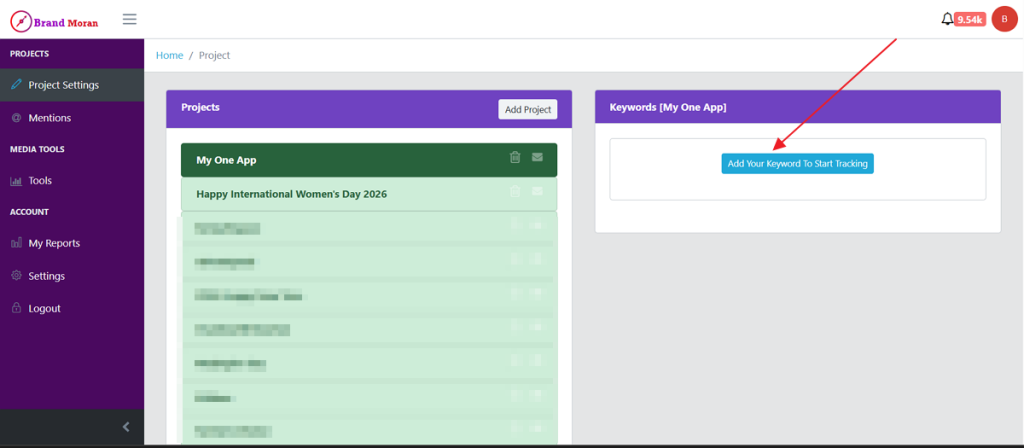
For instance, if you have an upcoming maternal health conference, pre-event monitoring would track hashtags, monitor global health journalists covering the beat, and capture any early coverage of keynote speakers or thematic issues like maternal mortality rates in sub-Saharan Africa.
| Pre-event monitoring gives you a media map before the conference begins — so you know which journalists to engage, which narratives are already forming, and which outlets to pitch for advance coverage. |
Phase 2: Real-Time Monitoring During the Conference
The second phase of media monitoring of a conference or event is where media monitoring becomes most critical — and most demanding. During a 3 to 5-day international conference, media activity can spike dramatically. A monitoring partner provides:
- Daily monitoring summaries are delivered each morning
- Real-time alerts for breaking coverage, viral posts, or reputational risks
- Mention count tracking — how many stories are being published per day?
- Outlet tracking — which media organizations are covering the event?
- Journalist and influencer identification — who is engaging most with your content?
- Sentiment monitoring — is coverage positive, negative, or neutral?
- Emerging narrative tracking — what themes are dominating the coverage?

For the tech and AI conference in Nairobi, a daily briefing might reveal that international tech journalists are amplifying a major keynote on artificial intelligence, that a specific hashtag is trending on X, or that a local television station has aired a segment sparking widespread discussion across developer and startup communities online.
Equally important is what a monitoring partner flags as a risk. If a negative narrative begins to form — perhaps around a controversial policy position or a misquoted speaker — real-time monitoring allows the communications team to respond before the story spreads.
| Is your organization hosting or attending an international conference?
Brand Moran provides real-time media monitoring with daily briefings across online news, print, TV, radio, and social media. Contact us today → www.brandmoran.com |
Phase 3: Post-Conference Media Monitoring Analysis
Phase three is the post-conference media analysis. Well, as a fact, the conference ends. But the media conversation does not. Post-event coverage — analysis pieces, opinion articles, social media recaps, and follow-up stories — can continue for weeks. A comprehensive post-conference media report should include:
| Report Element | What It Covers |
| Total Mentions | Number of stories, posts, and broadcasts captured across all platforms |
| Top Outlets | Which media organizations generated the most coverage |
| Top Journalists | Reporters and editors who covered the event most actively |
| Audience Reach | Estimated total audience exposed to conference coverage |
| Geographic Spread | Where in the world coverage was generated |
| Sentiment Analysis | Breakdown of positive, negative, and neutral coverage |
| Key Narratives | The dominant themes and storylines that emerged |
| Social Media Engagement | Highest-performing posts, top influencers, hashtag performance |
This report becomes a powerful internal document shared with donors, partners, board members, and sponsors to demonstrate the reach and impact of the conference.
Why Local Monitoring Matters for International Events in Africa
One of the most common mistakes international organizations make when hosting conferences in Africa is relying on global monitoring tools that are not calibrated for local and regional media landscapes.
Global tools are strong at capturing coverage from major international outlets. What they frequently miss is the rich ecosystem of local and regional African media that often generates the most relevant and influential coverage for events held on the continent.
- Kenyan print outlets, including daily newspapers with significant readership
- East African regional publications covering health, policy, and development
- Pan-African media organizations with continental reach
- Local television and radio stations broadcasting in English and Swahili
- African health and development blogs with highly engaged professional audiences
For the Nairobi maternal health conference, the most influential coverage for Kenyan health policy stakeholders may not come from an international newswire. It may come from a local health journalist with deep community trust and a loyal readership among the very policymakers the conference seeks to influence.
A local media monitoring partner understands the Kenyan and African media landscape from the inside. They know which outlets matter, which journalists cover which beats, and how to capture coverage that global tools simply miss.
What to Look for in a Conference Media Monitoring Partner
Not every media monitoring provider is equipped for the demands of a major international conference. When evaluating a partner, ask these questions:
- Do they monitor local Kenyan and regional African media — not just international outlets?
- Can they provide real-time alerts and daily briefings during the conference?
- Do they track across all channels — online news, print, TV, radio, blogs, and social media?
- Can they deliver sentiment analysis and narrative tracking — not just mention counts?
- What does their reporting format look like? Is it clear, actionable, and shareable?
- Have they monitored similar events — health conferences, policy summits, international gatherings?
- Can they mobilize quickly for an urgent or last-minute monitoring brief?
| The right monitoring partner does not just deliver data. They deliver intelligence — turning raw coverage into insights your communications team can act on immediately. |
Real-World Example: Monitoring a Global Maternal Health Summit in Nairobi
To illustrate the full monitoring lifecycle, consider an international conference focused on maternal and newborn health, held in Nairobi over four days and bringing together policymakers, health professionals, researchers, and global health partners.
The monitoring scope for an event of this size and significance would include:
- Tracking the official conference name, official hashtags, and all major speaker names
- Monitoring thematic keywords related to maternal health, newborn mortality, and health policy in Africa
- Capturing coverage from Kenyan, East African, pan-African, and international outlets
- Providing daily briefings each morning, highlighting overnight and early coverage
- Alerting the communications team in real time to any negative narratives or reputational risks
- Monitoring social media across X, LinkedIn, Facebook, and Instagram for conference hashtags, mentions, and influencer activity
- Producing a comprehensive post-conference report within five to seven days of the event closing
The post-conference report for this event would give organizers a clear picture of total media reach, geographic spread of coverage across Africa and internationally, the dominant narratives that emerged, and the journalists and influencers who shaped the conversation.
This is the kind of media intelligence that helps health organizations demonstrate impact to donors, justify future funding, and understand how their conference shaped the broader global health conversation.
Conclusion: Media Monitoring Is Not Optional for International Conferences
An international conference is a significant investment of time, resources, and organizational credibility. The media coverage it generates is one of the most important returns on that investment.
Media monitoring ensures that you capture that return in full. It gives your communications team real-time intelligence during the event, protects your reputation when narratives shift, and produces a comprehensive record of your conference’s media impact long after the closing session.
For international events hosted in Africa, local expertise is not a nice-to-have. It is essential. A monitoring partner who understands the Kenyan and African media landscape will capture what global tools miss — and deliver insights that are relevant to the stakeholders who matter most.
| Planning a conference or summit in Kenya or Africa?
Brand Moran provides end-to-end media monitoring — pre-event, live, and post-conference — with daily briefings and comprehensive reports across online news, print, TV, radio, blogs, and social media. Contact us today → www.brandmoran.com | Available for urgent monitoring briefs |
| About Brand Moran
Brand Moran is a professional media monitoring and social listening platform built for brands, organizations, and agencies in Kenya and across Africa. We track every mention of your brand across online news, print, TV, radio, blogs, and social media — and deliver clear, actionable reports on a daily, weekly, or monthly basis. www.brandmoran.com |