


A flight delay, system outage, network interruption, delayed delivery or temporary service disruption can attract public attention within minutes.
Operational teams may be working to restore the service while customers search for answers, journalists follow developments, screenshots circulate and people begin sharing their experiences online. At the same time, communication teams need a clear picture of how the conversation is developing.
This is where reputation monitoring during a service disruption becomes valuable.
Effective monitoring gives communication teams visibility into the questions people are asking, the issues appearing repeatedly, changes in sentiment, media narratives and the people shaping the conversation.
At Brand Moran, we recommend approaching service disruptions with one practical question:
What does the communication team need to understand right now to make a better decision?
A structured monitoring framework can provide that answer.
1. Monitor Conversation Volume to Understand How Attention Is Developing
Conversation volume gives communication teams an early view of how public attention is changing. At the beginning of a disruption, only a handful of customers may be discussing the issue. A few hours later, mentions can spread across social media platforms, online news, forums and other digital channels.
The speed of that change is important.
For example, an airline experiencing operational disruption could monitor its brand name alongside airport names, routes, flight numbers and words such as delay, cancellation, rebooking and refund. On the other hand, a bank experiencing a service interruption could combine its brand name with terms related to mobile banking, transactions, cards, ATMs or online banking.
It is important to note that using related keywords gives the communication team a clearer picture of what is driving the conversation, whereas context then adds meaning to the numbers.
A rise in mentions may come from customers seeking information, media outlets publishing updates, creators sharing experiences or industry accounts discussing the situation.
Therefore, once volume changes, the next question should be:
What is driving the increase?
The answer helps determine where the communication team should focus its attention.
2. Use Customer Questions to Identify Communication Gaps
During a disruption, customers often reveal their information needs through the questions they ask.
A passenger may want to know whether a flight is affected, whether rebooking is available or when operations will resume. A banking customer may ask when a digital service will return or what will happen to a delayed transaction.
Individually, these questions provide useful feedback. When similar questions begin appearing repeatedly, they become a valuable communication signal.
Suppose passengers keep asking about rebooking procedures. That pattern suggests the next public update should make rebooking information easier to find.
Likewise, recurring questions about service restoration may indicate that customers need a clearer timeline or a more visible source of verified information.
A useful communication loop begins to emerge:
Customer questions → recurring theme → communication insight → clearer update
Social listening can therefore help organisations improve communication while the situation is still developing.
Another useful source of insight is the language customers use. Internal terminology may differ from the phrases people use when describing their experience online. Monitoring those phrases can help communication teams produce updates that are easier for audiences to understand and search for.
3. Analyse Sentiment Together With the Experience Behind It
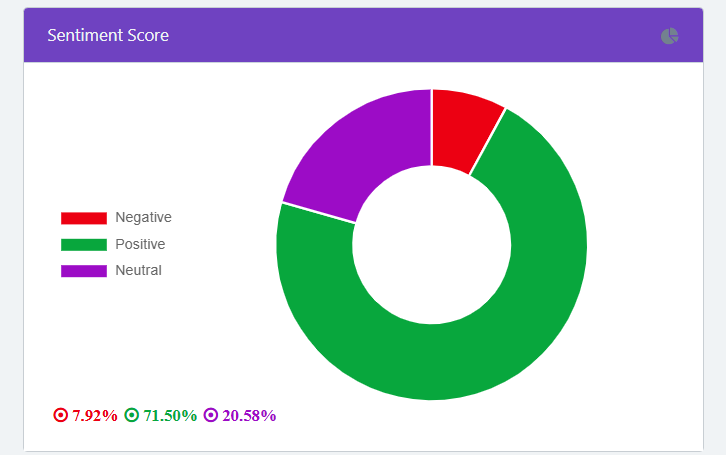
Conversation volume shows how much discussion is taking place. Sentiment helps explain how people are responding.
During a service disruption, audiences may express frustration, confusion, concern, relief or appreciation. Each reaction offers a different communication insight.
For instance, frustration may relate to waiting time. Confusion may result from conflicting updates. Concern may centre on service restoration, while appreciation may follow a clear and timely announcement.
This is why sentiment analysis becomes more useful when teams connect the emotion with the topic behind it.
Instead of looking only at whether conversations are positive, neutral or negative, communication teams should ask:
What is shaping this sentiment?
That distinction supports better decisions.
If customers are confused because several versions of an update are circulating, the communication response may focus on clarification. Also, if frustration centres on a specific process, the team may need to provide clearer instructions or coordinate with the operational team.
Over time, sentiment also helps organisations evaluate their communication.
A reduction in confusion after an updated announcement may show that the information answered an important customer question. Continued uncertainty may indicate a need for another update.
In this way, sentiment analysis becomes a practical reputation-management tool rather than a dashboard score.
4. Monitor Information Accuracy as the Situation Develops
Service disruptions create fast-moving information environments.
Official updates, screenshots, customer posts, media reports and informal messages may circulate at the same time. As circumstances change, older information can remain visible and continue influencing customer expectations.
Communication teams therefore need visibility into the information people are actually seeing and sharing. You can consider an airline that initially expects operations to resume at 2 p.m. A later update moves the expected time to 5 p.m. Screenshots of the earlier announcement may continue circulating long after the revised information has been published.
Monitoring can reveal which version is gaining attention.
The same principle applies to old schedules, unofficial announcements, rumours and conflicting instructions.
Once communication teams understand which information is circulating, they can respond with a clearer timestamped update, a pinned announcement, an FAQ or a link to one authoritative source.
This makes information accuracy an important part of reputation monitoring.
Public perception develops from the information available to audiences. Visibility into that information environment helps organisations communicate with greater clarity.
5. Track Media Coverage to Understand the Wider Narrative
As attention grows, a service disruption may move from customer conversations into mainstream and digital media coverage. At that point, communication teams need to understand how the issue is being framed.
- Which outlets are covering the story?
- What themes appear most often?
- Which sources are journalists quoting?
- What questions are reporters asking?
- Which aspect of the disruption is receiving the most attention?
The answers help reveal the wider narrative surrounding the organisation.
For example, a story centred on temporary service delays creates a different impression from one focused on passengers waiting for several hours. Both stories may describe the same operational event, yet the framing influences how broader audiences understand it.
Media monitoring helps communication teams see those differences as coverage develops. That insight can support spokesperson preparation, leadership briefings, media responses and public updates. Social listening and media monitoring also complement each other well in this situation.
Social listening provides visibility into audience experiences and reactions, whereas media monitoring shows how the issue is being framed, interpreted and amplified through news coverage.
Together, they give communication teams a broader view of the reputation environment.
6. Identify Who Is Driving the Conversation
Every public conversation has participants, and some voices influence its direction more strongly than others. During a disruption, customers may share first-hand experiences. Journalists may seek clarification. Creators may amplify particular incidents. Employees may add context, while industry accounts may provide analysis. Understanding these different roles helps communication teams see how the conversation is travelling.
A customer with a small following may provide a valuable first-hand signal. Meanwhile, a journalist or creator with an engaged audience may expose the issue to thousands of additional people.
Follower count provides one indicator, while relevance, credibility, engagement and proximity to the issue provide further context.
Useful reputation monitoring therefore examines questions such as:
- Who introduced a particular issue?
- Who amplified it?
- Which accounts are generating discussion?
- Which communities are participating?
- Which journalists or media outlets are shaping the public narrative?
Mapping these conversation drivers helps communication teams prioritise engagement and prepare internal stakeholders.
For example, several journalists asking similar questions may signal an angle that a spokesperson should be ready to address.
Likewise, repeated customer posts about the same experience may point to an issue that requires closer operational and communication attention.
7. Turn Monitoring Into Communication Decisions
A monitoring dashboard becomes most valuable when it helps a team decide what to do next.
During an active disruption, hundreds or thousands of data points may be available. Communication teams need a simple way to move from information to action.
A practical framework is:
Monitor → Understand → Respond
First, monitor the developing conversation across brand mentions, customer questions, sentiment, media coverage, information accuracy and key conversation drivers.
Next, identify the patterns.
- Which question appears most frequently?
- What is driving confusion or frustration?
- Which narrative is attracting attention?
- Where is inaccurate information circulating?
- Who is influencing the conversation?
From there, the communication team can determine the appropriate response.
That may involve publishing an updated service notice, expanding an FAQ, briefing customer-care teams, preparing a spokesperson, clarifying circulating information or providing journalists with verified details.
Each action should connect directly to the insight coming from the monitoring process. This creates a useful bridge between conversation data and communication decisions. Rather than producing a dashboard primarily for reporting, the organisation uses monitoring as part of its reputation-management process.
Build the Monitoring Framework Before a Service Disruption
Preparation strengthens reputation monitoring.
When public attention rises, communication teams benefit from already knowing which keywords, channels and signals they need to track. A strong framework should define the brand, product and service terms being monitored, the relevant social and media sources, normal conversation patterns and the signals that require closer investigation.
Internal responsibilities should also be clear.
- Who reviews the monitoring data?
- Who receives an alert when a recurring issue appears?
- What information should senior leadership receive?
- How often should monitoring updates be produced during an active incident?
These decisions improve speed and coordination. Baselines are equally useful.
Understanding normal mention volume, common customer questions and typical sentiment gives teams something to compare with when conversation patterns shift.
For example, five similar complaints appearing within a short period may deserve closer investigation than hundreds of unrelated mentions spread across several topics.
Speed, repetition, source, sentiment and context all contribute to interpretation.
Ongoing monitoring therefore strengthens both day-to-day reputation management and communication during high-attention moments.
From Social Listening to Reputation Intelligence
Service disruptions generate large amounts of information very quickly. Customers share experiences. Questions appear. Media coverage develops. Sentiment changes. New voices enter the conversation.
The communication team’s role is to turn that activity into understanding.
Effective reputation monitoring should help answer five questions:
- What changed?
- Why did it change?
- Who is shaping the conversation?
- How are audiences responding?
- What should the organization do next?
These answers transform social listening and media monitoring into reputation intelligence.
For organisations operating in Kenya and across Africa, localised context adds another important layer. Language, consumer behaviour, local media ecosystems and market-specific conversations influence how reputation issues develop.
Brand Moran brings these signals together through localised social listening and media monitoring, helping organisations understand conversations, sentiment, media coverage and emerging issues within their market context.
Monitor Your Reputation With Brand Moran
Clear visibility into public conversations gives communication teams stronger information for decision-making during a service disruption.
Brand Moran is a localised social listening and media monitoring tool that helps organisations track brand conversations, sentiment, media coverage, campaigns and emerging issues.
Whether your organisation is managing an operational disruption, a campaign or an emerging reputation issue, Brand Moran helps you understand the conversation as it develops.
Talk to Brand Moran about social listening, media monitoring and reputation monitoring in Kenya and across Africa.