


Your programme launched. The press release went out, partners were briefed and community sessions took place. But did the conversation follow? Did people understand the issue differently, or did the campaign simply pass through the news cycle?
Most non-governmental organisation (NGO) reports can show activities completed, people reached and content published. Those figures matter, but they do not always reveal what people understood, questioned or repeated afterwards.
This is where social listening becomes valuable for NGOs. It helps organisations monitor relevant public conversations as they happen, identify emerging concerns, and assess how their programmes, campaigns, and issues are discussed beyond their official channels.
Social listening does not replace monitoring, evaluation and learning (MEL). It adds timely evidence between formal evaluation points, helping teams make better-informed decisions.
What does social listening mean for an NGO?
Social listening involves tracking selected keywords, mentions, hashtags and topics across relevant public digital sources, then analysing the conversations to identify patterns and insights.
For a business, the focus may be customer satisfaction, product feedback or competitor activity. NGOs have a different set of questions:
- Is public understanding of an issue changing?
- What concerns or misconceptions are emerging?
- Are people discussing the programme even when they do not tag us?
- Is inaccurate information spreading?
- Which messages and voices are shaping the conversation?
- What evidence can strengthen programme learning and reporting?
Instead of asking only, “Are people talking about us?”, an NGO can ask, “What does this conversation tell us about our mission, programme and communities?”
7 Ways NGOs can Use Social Listening To Track Impact
Here are seven ways in which your NGO can use social listening to track impact and protect your organization.
1. Monitor programmes between formal evaluation points
Midline and endline evaluations offer structured evidence, but questions and reactions emerge throughout a programme. A maternal health organisation, for example, could monitor public conversations about clinic delivery, skilled birth attendance and barriers to accessing care in its programme locations.
Recurring concerns provide a signal to investigate through field staff or community feedback channels. They do not prove behaviour change, but they help the organisation know what to examine next.
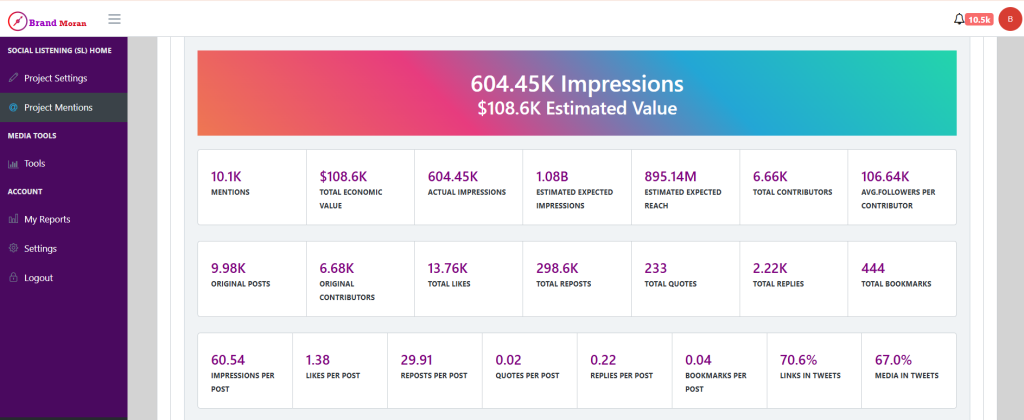
Using Brand Moran, an NGO can monitor relevant programme names, issue keywords, locations and hashtags from one dashboard. Mention volume and sentiment trends can help teams recognize changes that require closer review.
2. Strengthen community needs assessment
Questionnaires and focus groups remain essential, but public conversations can surface concerns that were not included in the original research design.
For instance, before launching a water, sanitation and hygiene programme, for example, an NGO could monitor public discussions about water access in the target county. Conversations may point to recurring frustrations around distance, cost, broken infrastructure or the reliability of particular water points.
These insights can refine research and programme design. However, online conversation does not represent everyone, especially communities with limited internet access. It must complement direct engagement.
This reflects the wider accountability principle in the Core Humanitarian Standard, which calls for people and communities to be placed at the centre of decisions affecting them.
3. Detect misinformation and reputational risks early
A rumour about an NGO’s intentions, programme eligibility or use of funds can spread quickly, particularly when no one is monitoring the language associated with it.
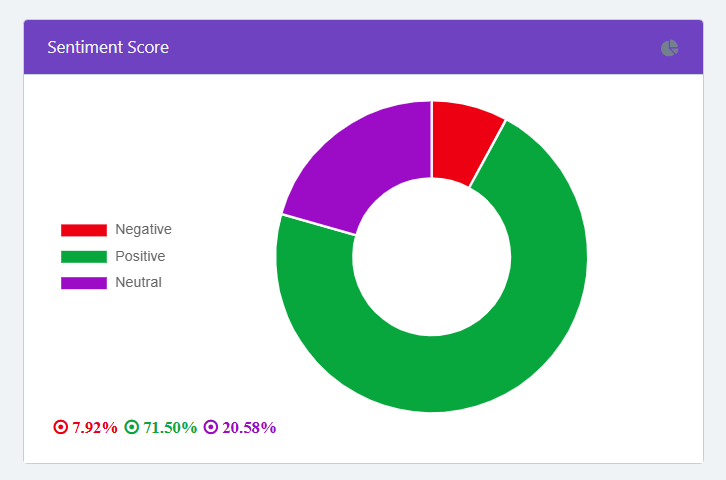
Social listening helps teams detect unusual increases in mentions, negative sentiment and repeated claims, giving them time to verify the facts and decide whether a response is necessary.
If an inaccurate claim about a health intervention begins appearing repeatedly, the organisation can investigate before it gains wider attention. It might clarify programme information, brief community mobilisers or engage trusted health professionals.
Brand Moran supports customised real-time alerts by SMS or email, helping responsible staff notice changes without continuously checking multiple platforms.
An alert is not proof that a crisis exists. It is an early warning that requires human verification and context.
4. Improve donor and MEL reporting
Social listening can add communication and perception indicators to the evidence NGOs share with donors and decision-makers.
Instead of reporting only that a campaign published a certain number of posts, the organisation can also examine:
- How conversation volume changed during the campaign
- Whether positive, neutral or negative sentiment shifted
- Which themes appeared most frequently
- Which content or voices generated discussion
- Whether campaign language appeared in wider public conversation
- What concerns emerged and how the programme responded
Brand Moran allows teams to analyse mentions and sentiment and export data for quarterly reviews, management briefings and donor reports. These findings should be triangulated with surveys, interviews and programme indicators rather than presented as standalone proof of impact.
5. Improve advocacy and policy timing
Advocacy campaigns often cover a broad issue, while public attention may be concentrated on one clause, decision, personality or moment. Social listening helps an NGO see where the conversation is moving.
An organisation following a proposed bill could monitor its name, specific clauses, relevant institutions and public figures. This can reveal which issue is attracting attention, what is being misunderstood and when an explainer or media intervention may be useful.
Advocacy teams can then respond to emerging questions instead of repeating the same message throughout the campaign.
6. Identify credible advocates and influential voices
The most useful advocate is not always the person with the largest following. It may be a journalist, subject expert, community organiser or creator who is already discussing the issue and earning meaningful engagement from the target audience.
Social listening can identify people who contribute frequently to an issue and the response they receive. A youth employment NGO, for example, may discover creators already helping young people identify job scams or understand employment initiatives.
Brand Moran helps organisations identify influential contributors and advocates, offering a stronger basis for outreach than follower count alone. Teams should still review credibility, values, previous content and safeguarding considerations.
7. Measure narrative change, not just campaign reach
Reach and impressions show exposure. They do not show whether people understood or adopted the message.
Narrative change looks at whether the words, explanations and assumptions used in public conversation are changing. After a gender-based violence awareness campaign, for example, an NGO might assess whether comments increasingly mention available reporting channels, survivor support or consent rather than repeating harmful myths.
This requires more than a sentiment score. Teams should compare recurring phrases, questions and themes before, during and after the campaign. Brand Moran’s mention analytics, sentiment analysis and exportable data can support the review, showing not only who could have seen a message but how the issue was discussed.
Why local context matters in social listening
NGOs working in Kenya and across Africa operate in conversations shaped by local media, programme names, place names, abbreviations, slang and code-switching. Monitoring only formal English terms can therefore leave important gaps.
Keyword lists should reflect the language people use, including alternative spellings, Swahili terms, Sheng expressions, project nicknames, place names and misconceptions identified by field teams.
Automated sentiment should always be reviewed in context. Sarcasm, humour and code-switched language can be misclassified by any automated system. Local knowledge remains essential when interpreting the results.
Brand Moran is tailored to organisations operating in Kenya and Africa. It monitors keywords and hashtags across social media, local digital publications and blogs, allowing teams to focus on relevant issues and locations.
How to build an NGO social listening framework
1. Start with a decision, not a dashboard
Define what the organisation needs to understand. “What concerns are emerging around maternal health services in Kisumu County?” is more useful than “health”.
2. Build a complete keyword list
Include the organisation’s name, acronym, programmes, campaign terms, leadership names, partners, locations, issue keywords, hashtags, misspellings and relevant local-language variations.
3. Establish a baseline
Measure normal mention volume, sentiment and recurring themes before a campaign or programme milestone. This provides a point of comparison for later changes.
4. Create alerts and escalation rules
Define what requires routine review, investigation or immediate escalation, and assign responsibility across communications, programmes, MEL, safeguarding and leadership.
5. Combine digital signals with other evidence
Compare social listening insights with community dialogues, surveys, complaints mechanisms, field reports and programme data. UNICEF guidance similarly treats social listening, media monitoring, surveys and community feedback as complementary sources.
6. Report what the organisation learned and changed
Explain what the conversation revealed, what the organisation investigated, the action taken and what changed as a result.
Turn online conversations into useful programme intelligence
Social listening does not replace monitoring, evaluation or community engagement. It provides a timely view of public questions, narratives, concerns and emerging risks between formal evaluation points.
Used responsibly, it helps NGOs monitor programmes, strengthen reporting, respond to misinformation, identify advocates and understand whether campaign messages are moving beyond their official pages.
The value lies not in collecting more mentions, but in turning those mentions into decisions that protect the mission and improve the work.
Start listening with Brand Moran
Brand Moran helps NGOs monitor media and public online conversations around their organisation, programmes, campaigns, leaders and areas of work. With keyword and hashtag tracking, mention analytics, sentiment analysis, customised SMS or email alerts and exportable reporting, your team can identify what requires attention and respond with better information.
Do you know what people are saying about your programmes beyond your official pages?
Book a Brand Moran demonstration or email info@brandmoran.com to explore a social listening and media monitoring workflow designed around your organisation’s mission, programme locations and reporting needs.
Frequently asked questions
What is social listening for NGOs?
Social listening for NGOs is the process of monitoring and analysing relevant public online conversations about an organisation, its programmes, campaigns and issue areas. It helps teams identify public concerns, sentiment, misinformation, influential voices and changes in discussion over time.
Can social listening measure NGO impact?
It can provide evidence of communication reach, public response and narrative change, but it cannot prove programme impact on its own. NGOs should combine social listening data with surveys, interviews, field observations and established MEL indicators.
What keywords should an NGO monitor?
An NGO should monitor its official name, acronym, misspellings, programme names, campaigns, leaders, partners, locations, issue terms, hashtags and relevant local-language variations.
Which social listening tool can NGOs in Kenya use?
Brand Moran is a Kenyan media monitoring and social listening platform tailored to organisations operating in Kenya and Africa. It offers keyword and hashtag monitoring, mention analytics, sentiment analysis, real-time alerts and exportable data for analysis and reporting.