


How do you write a post event report? Imagine this, you have hosted a conference, summit, forum, launch or industry event. The venue was full, speakers delivered their sessions, journalists attended and participants shared updates throughout the day. Once the event ends, however, another important task begins: reporting.
How much visibility did the event generate? Which media outlets covered it? What did people discuss online? Which themes attracted the most attention? How did audiences respond? Who helped amplify the conversation?
Attendance figures, photographs and a summary of the programme provide useful information. Yet a strong post-event report can go further by showing how the event travelled beyond the venue through media coverage and online conversations.
This is where media monitoring and social listening become valuable.
At Brand Moran, we recommend planning post-event reporting before the first speaker takes the stage. When the monitoring framework is established early, organizers can capture the build-up to the event, follow conversations as they happen and produce a richer report afterwards.
A useful approach follows the full event lifecycle: before, during and after the event.
What is a post-event report?
A post-event report is a structured account of an event, its performance and the insights that can guide future decisions.
Traditionally, such reports may include attendance figures, speaker information, programme highlights, photographs, participant feedback and logistical observations. For events with a communications or public-engagement objective, however, media and digital performance add another important layer.
For example, a summit may host 500 delegates in person while thousands more encounter it through online news, LinkedIn posts, X conversations, videos, speaker updates and partner channels. Therefore, assessing the event only through physical attendance leaves part of the story untold.
A communications-focused post-event report can capture that wider footprint. It can show the event’s media mentions, social media conversations, sentiment, dominant themes, top contributors and moments that generated the greatest attention.
As a result, organisers gain a clearer understanding of both what happened at the event and how the event was received outside the room.
Before the event: Build the monitoring framework
A useful post-event report begins with preparation.
Before selecting keywords or opening a monitoring dashboard, start by defining what the organisation wants to learn from the event. This step gives the eventual report direction.
A policy forum, for instance, may want to know whether its key policy messages entered public discussion. A corporate summit may prioritize media visibility and thought leadership. Meanwhile, an advocacy conference may focus on stakeholder voices, sentiment and message uptake.
Once those priorities are clear, the monitoring setup can reflect them.
1. Define what you want the report to show
Every event has different communication objectives. Consequently, every event report should answer slightly different questions. If media visibility is a priority, the report may need to examine publications, story angles, prominent journalists and the development of coverage over time.
Where audience engagement is central, the emphasis may shift towards social mentions, conversation themes, sentiment and participant contributions.
Similarly, an event designed around thought leadership may need to show which speakers, ideas or sessions generated the strongest discussion. Defining these objectives early creates a useful link between the purpose of the event and the data collected throughout it. In other words, monitoring should begin with a question rather than a metric.
2. Set up the right keywords, hashtags and entities
With the objectives established, the next step is deciding what to track. The official event name is an obvious starting point. From there, the monitoring query can include the official hashtag, organizer name, abbreviations, campaign slogans, speaker names, partner organizations, sponsors and major programme themes.
Consider a fictional event called the Africa Digital Futures Summit 2026. The monitoring setup may include the full event name, #AfricaDigitalFutures, shortened variations, the organiser, selected speakers and topics such as artificial intelligence, digital skills, cybersecurity and digital inclusion.
Testing these keywords beforehand is equally important.
Some event names, abbreviations and hashtags may overlap with unrelated brands, common words or other events. A quick review of sample results can reveal where exclusions or additional context are required.

The same principle applies to audience language. Participants may refer to an event using a shortened name, mention a speaker instead of the event itself or discuss a session without using the official hashtag. Therefore, strong event monitoring combines the language organizers expect with the language audiences actually use.
3. Establish a pre-event baseline
After the monitoring terms are defined, capture the conversation before the event begins. This pre-event baseline helps explain how attention develops.
Speaker announcements, registration campaigns, media interviews and partner promotions may already be generating visibility several days or weeks before the event. By tracking this activity, the final report can show the progression from early awareness to the live event and, eventually, the post-event conversation.
For instance, instead of simply reporting that an event generated 4,000 mentions, the organisation can show how the conversation grew during the campaign, peaked around key event moments and continued afterwards.
That timeline makes the final number far more meaningful.
A baseline also provides context for sentiment, leading themes and active contributors. Consequently, organisers can distinguish normal pre-event activity from significant changes once the programme begins.
4. Choose an appropriate monitoring period
The event dates should sit within a wider monitoring window.
For a one-day conference, monitoring could begin approximately a week before the event and continue for several days afterwards. A larger summit with an extended communications campaign may require a longer period on both sides.
The exact timeframe will depend on the event, media interest and campaign plan. Even so, the principle remains consistent: capture the build-up, the live conversation and the follow-through.
This gives the report a complete narrative rather than a snapshot of one day.
During the event: Follow the conversation as it develops
Once the event begins, the monitoring dashboard becomes a live source of audience and media intelligence.
At this stage, organisers can see which sessions are generating interest, what participants are sharing, which speakers are being quoted and how media coverage is developing.
Rather than waiting until the event ends to piece everything together, communication teams can follow the conversation while it is still active.
1. Track social media mentions beyond the official hashtag
The official event hashtag provides useful data, although it rarely captures the entire conversation.
A participant may quote a speaker without using the hashtag. Another may tag the organising institution. A journalist may mention a keynote speaker, while someone following remotely may discuss a session topic without referring to the event directly.
For that reason, social media monitoring should include several pathways into the conversation. This broader approach often reveals unexpected audience interests.
For example, a panel on digital transformation may generate a strong side conversation about AI skills and employment. Even if that subject occupied only part of the programme, it may become one of the strongest themes online.
Capturing these conversations helps the post-event report reflect the audience’s actual takeaways rather than relying only on the official agenda.
2. Monitor media coverage while it appears
At the same time, media monitoring should follow the stories being published around the event.
Which sessions are becoming news stories? Which announcements are appearing in headlines? Which speakers are being quoted? What themes are journalists emphasising?
Following coverage during the event can also help the communications team respond to media interest more effectively.
For example, if several journalists begin focusing on one issue, the organisation can prepare additional information, identify an appropriate spokesperson or provide supporting material while interest is still high.
Later, the media section of the post-event report can show the outlets that covered the event, the dominant narratives, key headlines and how coverage developed across the monitoring period.
This gives organisers a clearer picture of earned media visibility.
3. Connect sentiment with the themes behind it
As the conversation develops, sentiment offers another layer of insight. Participants may express enthusiasm about a keynote, appreciation for networking opportunities, curiosity about an announcement or questions about a particular issue.
However, sentiment becomes most useful when the report explains what produced those reactions.
A percentage showing that most conversations were positive gives a general indication. Connecting that positive sentiment to specific experiences, sessions or announcements gives decision-makers something they can use.
Likewise, if questions or critical feedback cluster around registration, accessibility or event logistics, those themes can inform the next edition. This connection between sentiment and topic turns audience reaction into practical event intelligence.
4. Identify emerging conversation themes
Every event has an official theme, but audiences often create additional themes through what they choose to discuss.
A conference on the future of work, for example, may generate conversations around artificial intelligence, graduate employability, digital skills, entrepreneurship, remote work and education reform.
Monitoring these themes helps organizers see which ideas travelled furthest beyond the stage.
Moreover, strong themes can inform post-event communication. A topic that generates sustained discussion may be suitable for a follow-up webinar, article, policy brief, podcast episode or future event session.
As a result, event monitoring becomes a source of content and audience intelligence, rather than simply an exercise in counting mentions.
5. Connect conversation peaks with programme moments
Another useful insight comes from examining when conversation rises.
Suppose mentions spike sharply at 10:20 a.m. By comparing the monitoring data with the programme, the team may discover that a keynote speaker made a significant announcement at that exact time.
Later, another increase may correspond with a panel discussion that generated strong debate. A third peak could follow the publication of a major news story.
Connecting these moments makes the final report easier to interpret.
Rather than displaying a line graph and leaving readers to guess what caused each spike, the report can explain which sessions, speakers, announcements or media stories drove attention.
This is where monitoring begins to tell the event’s story.
6. Identify the people and organisations driving the conversation
Alongside themes and peaks, organisers should also examine who is carrying the conversation.
Top contributors may include speakers, journalists, participants, creators, partner organisations, sponsors, media houses and industry voices.
Their contribution should be interpreted carefully.
Follower count provides one signal, but engagement, relevance and the ability to generate or amplify conversation often provide richer context.
A journalist may shape media coverage. A speaker may produce the most widely shared quote. A partner may consistently amplify event content, while an attendee may start a discussion that attracts significant engagement.
Understanding these roles can strengthen future media relations, speaker selection, partnerships and creator engagement.
After the event: Turn monitoring data into a useful report
When the programme closes, analysis begins.
At this stage, the monitoring team brings together media coverage, social mentions, sentiment, themes, contributors and conversation peaks. The goal is to convert that data into a report that senior management, partners and communication teams can understand quickly.
A strong post-event report should therefore tell a coherent story.
1. Begin with the executive summary
Start with the major findings. Senior decision-makers may read only the opening pages, so the executive summary should communicate the most important insights clearly.
It could explain the overall volume of conversation, the scale of media coverage, the strongest themes, audience sentiment, notable contributors and the event moments that generated significant attention.
Beyond reporting results, the summary should also highlight the implications. What performed particularly well? Which conversation deserves follow-up? What did the event reveal about audience interests?
By answering those questions early, the report becomes immediately useful.
2. Explain the media coverage generated
Next, show how the event appeared across the media landscape.
The analysis can include the number of relevant media mentions, publications covering the event, key headlines, coverage timeline, prominent narratives and notable interviews.
Context should accompany the numbers. For instance, if a keynote announcement generated most of the media coverage, the report should explain that relationship. Likewise, a theme repeated across several publications may indicate which event message travelled most successfully into the wider media narrative.
For organisers investing in PR and media relations, this section provides clear evidence of event visibility.
3. Analyse the social media conversation
Social media analysis should then show how discussion developed across digital platforms. Depending on the monitoring scope, the report may cover total mentions, platform distribution, hashtag activity, brand mentions, speaker references, conversation peaks and high-performing posts.
Yet the most valuable analysis goes beyond these totals.
Thousands of posts can still revolve around only a few strong themes. Identifying those themes tells organisers what captured attention and what audiences chose to continue discussing. This distinction turns social media reporting from a collection of metrics into an analysis of audience interest.
4. Explain sentiment in context
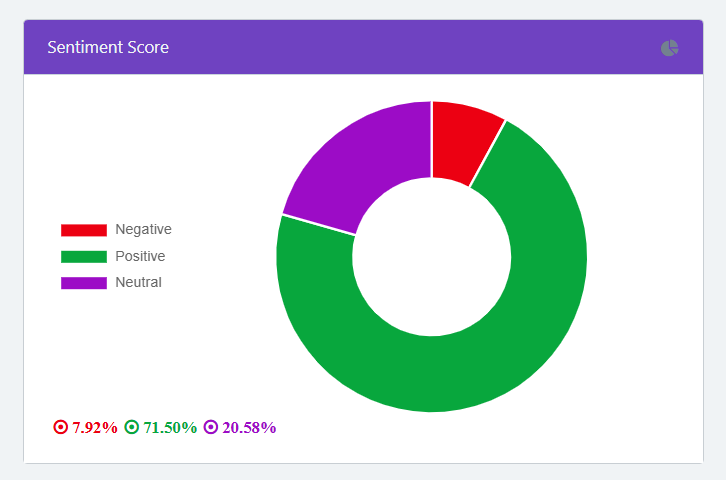
Next, use sentiment to interpret audience response. An overall sentiment distribution can provide a useful overview, while a short explanation should show what contributed to those reactions.
Positive conversations may focus on speaker quality, networking opportunities or new announcements. Questions may concentrate on access to presentation materials. Critical feedback may relate to logistics or registration.
Once those connections are clear, sentiment becomes part of organizational learning. Future events can build on strengths while addressing areas where participants needed more support or information.
5. Present the strongest conversation themes
Theme analysis can become one of the most informative parts of the report. Rather than asking decision-makers to review hundreds of individual posts, the report can group the conversation into a manageable number of topics.
For an AI conference, those topics may include digital skills, responsible AI, regulation, employment and education.
Each theme should then include a short explanation of what audiences were saying. This gives management a concise view of the ideas that resonated most strongly and provides a useful foundation for future programming and communication.
6. Highlight top contributors and influential voices
The report should also identify the individuals and organisations that helped extend the event conversation.
Instead of presenting a simple popularity ranking, explain the contribution each made.
A journalist may have generated substantial media discussion. A speaker may have created one of the most shared event moments. A partner may have amplified the programme throughout the day, while a participant may have generated a valuable discussion around one of the themes. For sponsors and partners, this section can also demonstrate how different networks contributed to the event’s visibility.
7. Connect top content with event moments
Once the key contributors are identified, examine the content itself. Which post attracted strong engagement? Which quote travelled furthest? Which panel generated a noticeable conversation peak? Which announcement received media attention?
Connecting content performance with the programme helps organisers understand what resonated. Those insights can then influence future speaker selection, agenda design, content planning and promotional strategy.
8. Capture audience questions and feedback
A useful report should also preserve the questions audiences asked. Participants may request recordings, ask for presentation slides, praise a particular session or suggest areas for future discussion.
When similar feedback appears repeatedly, it becomes valuable event intelligence. Some of these insights can guide immediate post-event communication. Others can inform planning for the next edition. In this way, the event report becomes both a record of the past event and an input into the next one.
9. Finish with recommendations
Finally, bring the findings together into recommendations. If one theme generated exceptional interest, the organisation could continue the conversation through additional content. A journalist who showed sustained interest could become part of future media engagement. A recurring participant question could inform clearer pre-event communication next time.
Recommendations create the final connection between monitoring and decision-making.
The report then answers a broader question: What should the organization do with everything it learned from the event?
What should a post-event media monitoring report include?
A comprehensive report should bring the major strands of the event conversation together. Typically, this includes an executive summary, media coverage, social media mentions, sentiment analysis, conversation themes, top contributors, conversation peaks, high-performing content, audience feedback and practical recommendations.
The exact emphasis will depend on the event’s objectives.
A government forum may require deeper analysis of media narratives and stakeholder voices. An NGO summit may focus on advocacy themes and audience response. Meanwhile, a corporate conference may place greater emphasis on thought leadership, media visibility and brand mentions.
Therefore, the report structure should follow the communication goals established before the event.
How long should you monitor an event?
Event monitoring should follow the communications lifecycle rather than the venue schedule.
Pre-event activity captures early publicity and anticipation. Monitoring during the event records the live conversation. Afterwards, continued tracking shows how long media coverage and digital discussion remain active.
For many conferences and summits, monitoring may begin around a week before the event and continue for several days afterwards. Larger or higher-profile events may require a longer period.
Ultimately, the appropriate timeframe depends on how long the event is expected to generate communication activity.
How Brand Moran supports event media monitoring and reporting
Brand Moran helps organizations monitor and analyse media and digital conversations around conferences, summits, forums, launches and other public events.
Through localized social listening and media monitoring, event and communication teams can track media mentions, social media conversations, event hashtags, sentiment, speakers, partners, conversation themes, top contributors and emerging issues.
Monitoring can begin before the event, continue throughout the programme and extend into the post-event coverage period.
Afterwards, the insights can be brought together into an event media monitoring report for communications teams, senior management, sponsors and partners.
This gives organizers a clearer understanding of the event’s media and digital footprint and provides evidence they can use in communications evaluation, sponsor reporting and future event planning.
Your event generated a conversation. Capture the full story.
An event creates activity inside the venue and a wider conversation beyond it.
Attendance figures show who came. Media monitoring reveals how the event entered public coverage. Social listening shows what people discussed, how they responded, which themes resonated and who helped carry those ideas further.
When these elements are brought together, the post-event report becomes more than an event summary. It becomes a record of visibility, audience response and communication performance.
Brand Moran is a localized social listening and media monitoring tool that helps organizations track media coverage, online conversations, sentiment, campaigns, events and emerging issues.
Need a media monitoring report for your conference, summit or event?
Talk to Brand Moran about monitoring your event before, during and after it happens.